North Bangalore Real Estate Market Outlook: Supply, Demand and Prices
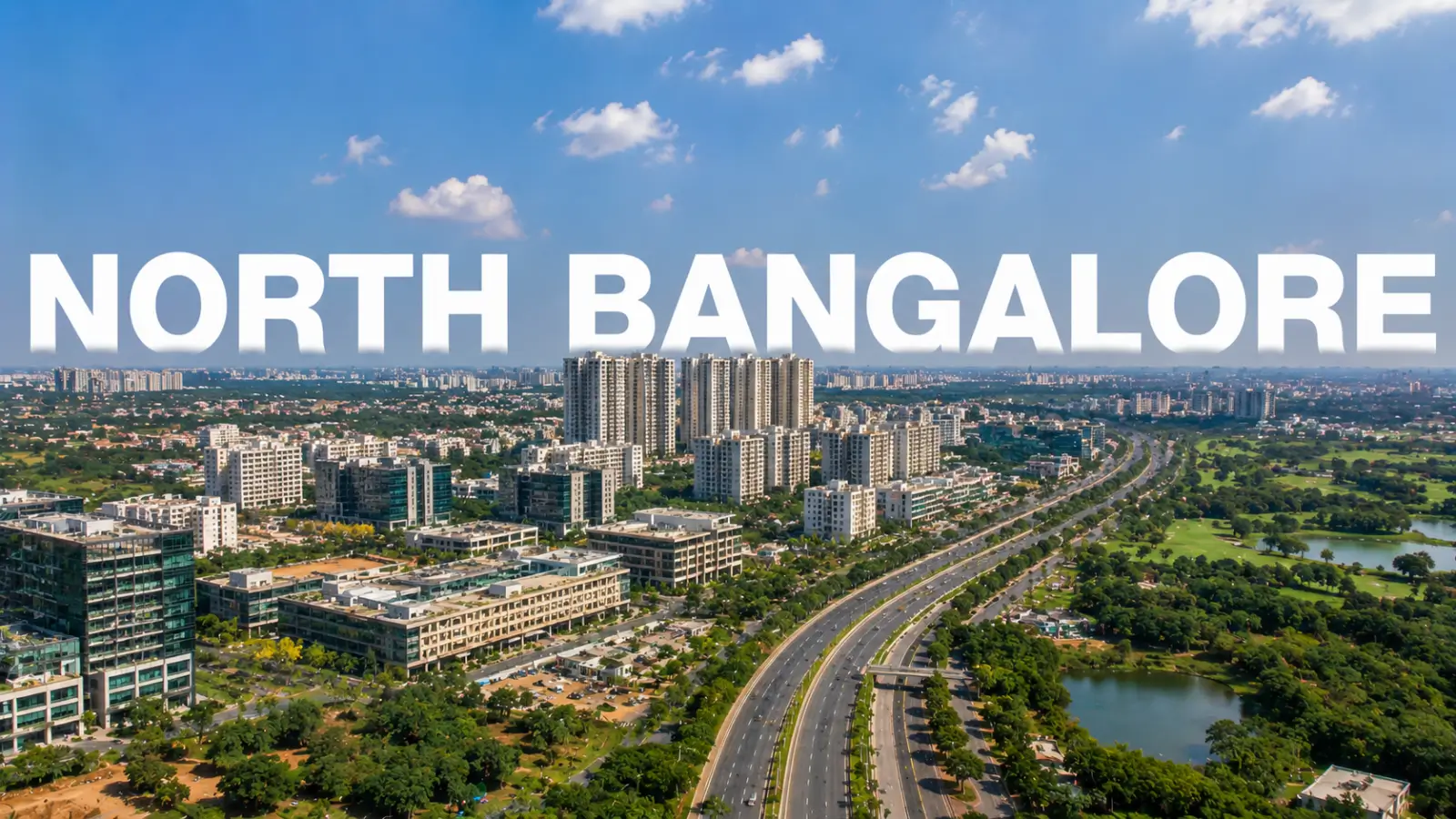
The North Bangalore real estate market outlook remains positive, supported by jobs, infrastructure and a growing preference for gated living....
The North Bangalore real estate market outlook remains positive, supported by jobs, infrastructure and a growing preference for gated living. Stretching from Hebbal to the airport, the belt has seen strong price growth, and the next few years will be shaped by the airport metro and the balance between new launches and finished supply. This post looks at the main forces shaping the next few years.
North Bangalore housing demand draws on a wide employment base: Manyata Tech Park, Karle Town Centre and Kirloskar Business Park to the south; the airport and aerospace park to the north. Hebbal prices have risen about 72.4% over three years, Yelahanka about 57.1% and Kogilu about 48.0%, showing demand spreading outwards from Hebbal. Rental demand from these employers has kept vacancies low in well-run gated communities.
Yelahanka new housing supply is significant, but most of it is still under construction. That leaves completed homes in short supply, particularly in low-density branded communities, and supports resale values. Buyers who need to move in soon face a narrower choice than headline supply suggests. That scarcity gives owners of completed homes some pricing strength, while buyers benefit from being able to inspect exactly what they are paying for.
Infrastructure will be the key swing factor. The Blue Line airport metro, expected in a 2027–28 window, will link Hebbal, Jakkur, Yelahanka and Bagalur Cross to the airport. Road upgrades across the north should also ease travel over time.
Risks include delays to infrastructure and competition from new launches for both buyers and tenants. Completed, well-maintained communities near transit, such as SOBHA Palm Court, tend to hold value better through such cycles. Buyers should watch those signals closely.
Buyer preferences are shifting as well. More families now look for gated communities with open space, amenities and security, and more investors look for completed homes that earn rent immediately. Low-density projects with established upkeep records are in particular demand, as buyers compare them with dense new towers. These preferences favour completed branded communities over speculative plots or unproven launches.
Overall, the North Bangalore real estate market outlook favours patient buyers who choose quality, location and transit access over short-term price moves.
Related reading: Yelahanka Property Price Trends 2026: 1, 3 and 5-Year Appreciation and Bangalore's GCC and Startup Boom: What It Means for Housing Demand.
FAQs
What drives demand in North Bangalore?
Jobs at the airport, the aerospace park and Hebbal–Manyata offices.Is new supply high in Yelahanka?
Yes, but most of it is still under construction.What is the main risk?
Delays to infrastructure and competition from new launches.
Related Articles

Is Bangalore Still a Good City for Property Investment in 2026?
Is Bangalore good for property investment in 2026? For many buyers, the answer remains yes, because the city combines a deep job market, a large...
Namma Metro Phase 2 and Phase 3: How the Network Reshapes Bangalore Property
The Namma Metro phase 2 impact on property is one of the biggest questions for buyers across Bengaluru. Phase 2 extends the network into new parts of...

How Does RERA Protect Homebuyers in Karnataka?
How does RERA protect homebuyers Karnataka residents buy from? The Real Estate (Regulation and Development) Act, 2016, and the Karnataka Real Estate...

Karnataka Stamp Duty and Registration Charges 2026: What Changed
Buyers planning a purchase this year often search for Karnataka stamp duty 2026 changes, and the key update dates from August 2025, when the state...